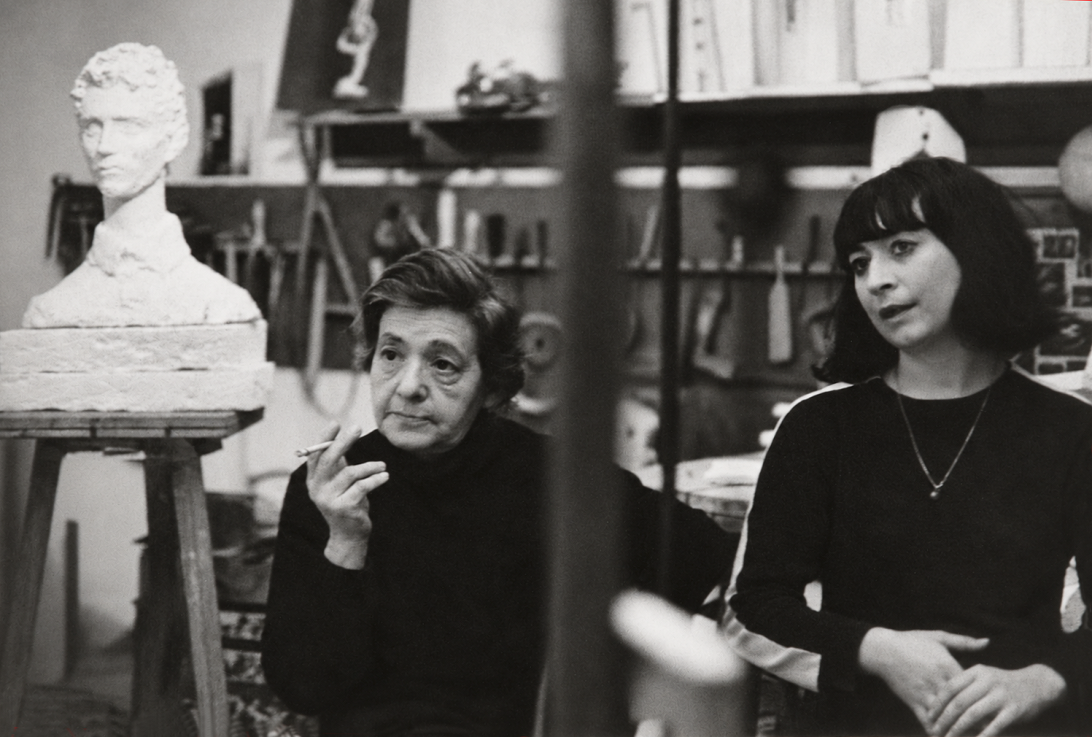
In 2026, the Ludwig Museum commemorates two important anniversaries. Katalin Néray, the museum’s first director, was born 85 years ago, and 30 years ago the Ludwig Museum became an independent institution: with the addition of a new collection unit, it became the Museum of Contemporary Art. The double anniversary provides an opportunity to look back, through Katalin Néray’s career, at key decades in Hungarian contemporary art and its institutional system. Her professional career was closely intertwined with the transformation of the Hungarian art scene from the mid-1960s to the turn of the millennium. Her work brings into focus changes in international cultural relations and the role of the Műcsarnok, the history of presenting Hungarian visual art abroad, the significance of the Venice Biennale, and the emergence of new institutional structures after the political transition. Among these developments was the Ludwig Museum’s establishment as an independent institution, with a distinctive profile defined from the outset by presenting Hungarian art in an international context. With the participation of invited speakers and Katalin Néray’s peers – artists, art historians and curators – the conference will address, among other questions, how contemporary art institutions could be run and international relations developed within the cultural policy framework of the period; what room for manoeuvre was available to art professionals and institutions; what role exhibitions played in presenting Hungarian art abroad and international art in Hungary; and how these conditions changed from the 1980s onwards and, following the political transition in Eastern Europe, during the 1990s.
PROGRAMME Wednesday, 21 October 2026
Third-floor exhibition space
9.30–10.00 | REGISTRATION
10.00–10.10 | WELCOME Julia FABÉNYI Director, Ludwig Museum – Museum of Contemporary Art Krisztina SZIPŐCS Deputy Director for Curatorial Affairs, Ludwig Museum – Museum of Contemporary Art
CULTURAL RELATIONS AND EXHIBITION INSTITUTIONS FROM THE 1960s TO THE POLITICAL TRANSITION The first section of the conference examines the period’s institutional system for the arts, the possibilities for international cultural relations, the exhibition-organising activities of the Institute for Cultural Relations (KKI), and the role of the Műcsarnok in the contemporary art scene.
10.15–10.35 | Emőke GRÉCZI art sociologist, editor-in-chief of MúzeumCafé Katalin Néray at the Institute for Cultural Relations (1964–1980) Founded in 1949 and subsequently reorganised several times, the Institute for Cultural Relations was an important institution of cultural policy, cultural diplomacy and international propaganda during the Kádár era. Its Propaganda Department coordinated international exhibition exchanges – mostly organised under intergovernmental agreements – in cooperation with the relevant ministries and with the Exhibition Institutions (Műcsarnok), which handled the practical implementation of the exhibitions. On the one hand, the Institute’s activities can be understood as part of the strict state control of cultural and artistic relations; on the other, it also provided an institutional framework that – by opening, in a sense, a “gap” in the system’s strict regulation – created opportunities for Hungarian art to gain an international presence and for foreign artists associated with newer artistic trends to be shown in Hungary. Organising exhibition exchanges therefore meant both operating within the framework defined by state cultural policy and providing an important arena for shaping international artistic relations. Katalin Néray joined the Institute in 1964 at the beginning of her career and, until its dissolution in 1980, worked on organising and implementing international exhibition exchanges. The network of contacts she built over the decade and a half she spent there, her experience in carrying out international projects, and her openness to progressive artistic tendencies all became defining factors in her later career. The experience and contacts she gained at the Institute laid much of the groundwork for her later role in mediating and further developing the international relations of Hungarian art.
10.35–10.55 | Júliusz HUTH art historian, Central European Research Institute for Art History, Museum of Fine Arts Katalin Néray and the Exhibition Institutions (1984–1992) Since its foundation, the Műcsarnok has been one of Hungary’s most prestigious exhibition venues, with one of the country’s largest exhibition spaces. Under state socialism, together with several Budapest galleries, it became part of the so-called Exhibition Institutions, which was responsible not only for national exhibitions but also for representing Hungarian fine and applied art abroad. Exhibitions organised by the Exhibition Institutions and the Műcsarnok were initially supervised by the ministry responsible for culture and later by the Fine and Applied Arts Advisory Board; however, as part of a decentralisation process unfolding in several waves from the early 1980s, the Műcsarnok was granted the right to organise exhibitions independently in 1983. Katalin Néray took over the management of the Exhibition Institutions in 1984 and, until 1992, served as director of the Műcsarnok and its affiliated galleries. During her directorship, the Műcsarnok provided more space than ever before for artists connected to international trends, and by the early 1990s it had become one of the region’s most prestigious exhibition venues for contemporary art. The lecture presents the operation of the state-socialist institutional system for the visual arts, as well as the institutional and exhibition history of the Exhibition Institutions and the Műcsarnok under Katalin Néray’s leadership.
11.00–12.00 | ROUNDTABLE DISCUSSION Participants: György KEMÉNY graphic artist, Márta KOVALOVSZKY art historian, Kincső VEREBÉLYI ethnographer, university professor, Barbara WIECHNO, former director of the Polish Institute in Budapest
Moderator: Dávid FEHÉR art historian, Director of the Central European Research Institute for Art History, Museum of Fine Arts
12.00–12.15 | AUDIENCE Q&A
THE MŰCSARNOK AND THE 1980s This section examines Katalin Néray’s tenure as director of the Műcsarnok, the turning points in the art scene of the 1980s, major exhibitions, and the possibilities for presenting Hungarian art internationally and international art in Hungary. 12.15–12.45 | Lóránd HEGYI art historian, former director of MUMOK, Vienna, and MAMC, Saint-Étienne The 1980s with Katalin Néray – The Turbulent Era of an Artistic Paradigm Shift In conversation with Julia FABÉNYI
12.45–13.30 | LUNCH BREAK
13.30–13.35 | VIDEO MESSAGES – International colleagues on Katalin Néray
KATALIN NÉRAY AND THE VENICE BIENNALE Hungarian participation in the Venice Biennale during Katalin Néray’s tenure as national commissioner, and the role of exhibitions in the international presentation of Hungarian art.
13.35–14.00 | Kinga BÓDI art historian, Head of the Collection of Prints and Drawings, Museum of Fine Arts Art Diplomacy with Campari. Katalin Néray’s Role in Ushering in a New Era in the History of Hungarian Exhibitions in Venice The lecture focuses primarily on how Katalin Néray changed the domestic and international role of the Hungarian Pavilion in Venice from the second half of the 1980s onward. The shift associated with her work lay not only in presenting a different kind of art in Venice than before, but also in rethinking the purpose of the national pavilion: should it remain a space of representation, or become an active node in a transnational art infrastructure? Taking the 1986, 1988 and 1990 exhibitions jointly credited to Katalin Néray and Lóránd Hegyi as a point of departure, the speaker asks how the practices and institutional knowledge of state-socialist cultural diplomacy persisted within a new curatorial system. Néray’s later work in Venice also demonstrates the importance of informal presence, trust-building and professional mediation. As the first woman to serve as national commissioner, she also marked a broader turning point in Hungary, extending beyond the field of art diplomacy. Finally, her work raises the question of how the less visible networks of international curatorial practice can become a source of professional and institutional power.
14.10–15.10 | ROUNDTABLE DISCUSSION Participants: László FEHÉR painter, Sándor PINCZEHELYI visual artist, Julianna P. SZŰCS art historian, editor-in-chief of Mozgó Világ Moderator: Géza BOROS art historian, Head of the Venice Biennale Office, Ludwig Museum – Museum of Contemporary Art
15.10–15.20 | AUDIENCE Q&A
15.20–15.35 | COFFEE BREAK
THE 1990s – THE (NEW) INSTITUTIONS OF CONTEMPORARY ART This section presents the Ludwig Museum’s development into an independent institution and the outstanding achievements of Katalin Néray’s international curatorial work.
15.35–15.55 | Krisztina SZIPŐCS art historian, Deputy Director for Curatorial Affairs, Ludwig Museum – Museum of Contemporary Art 1996 – In Sync with the World The year 1996 marked one of the high points of Katalin Néray’s professional career. She was the first Hungarian art historian to be invited to take part in two major international exhibitions: she was chief curator of the first edition of the new European biennial, Manifesta, in Rotterdam, and curator for Eastern Europe of “Universalis”, the central exhibition of the São Paulo Biennial. Through her professional work and network of contacts, Eastern European art gained a prominent presence on the international contemporary art scene, while her selections helped interpret and contextualise the art of the region for international audiences. In the same year, the institutional position of the Ludwig Museum, whose status had previously been uncertain, was also consolidated as a result of a decision by the cultural authorities and Katalin Néray’s work. In 1992, Néray took over an institution with no staff or infrastructure of its own, and over the next few years she built up the museum’s organisational and professional framework. As a result of this work and the decision of the cultural authorities, by 1996 the Ludwig Museum – Museum of Contemporary Art had become a fully functioning contemporary art museum with a distinct professional profile.
16.00–17.00 | ROUNDTABLE DISCUSSION Participants: Bálint MAGYAR sociologist, former minister of culture and education, Katalin BODÓ former ministerial chief of staff, Csilla CSORBA art historian Moderator: Tünde TOPOR art historian, editor-in-chief of Artmagazin
17.00–17.15 | AUDIENCE Q&A
17.15–17.30 | CLOSING REMARKS
The conference will be held in Hungarian.
Programme subject to change.
Please be informed that our events will be recorded by sound and video, from which the Ludwig Museum may use details to promote the museum and its programs and for other promotional purposes. By participating in our events, you agree that you may appear on the recordings, but you may not make any claim against the use of the recording with the Ludwig Museum or third parties authorized by it.