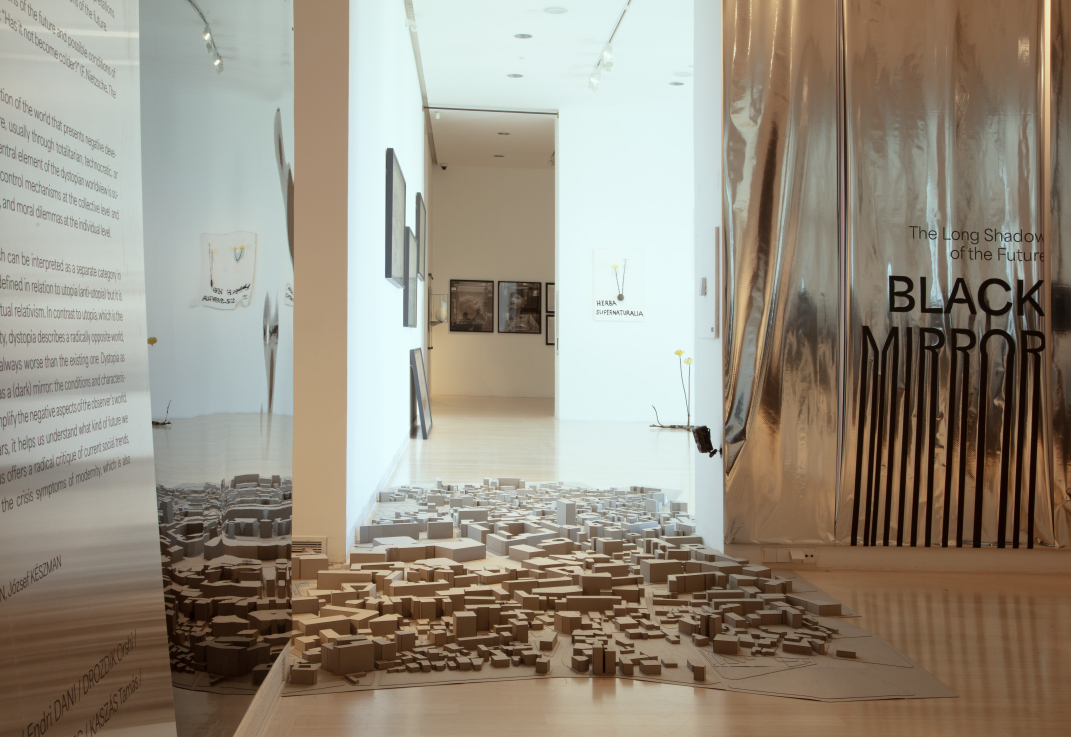
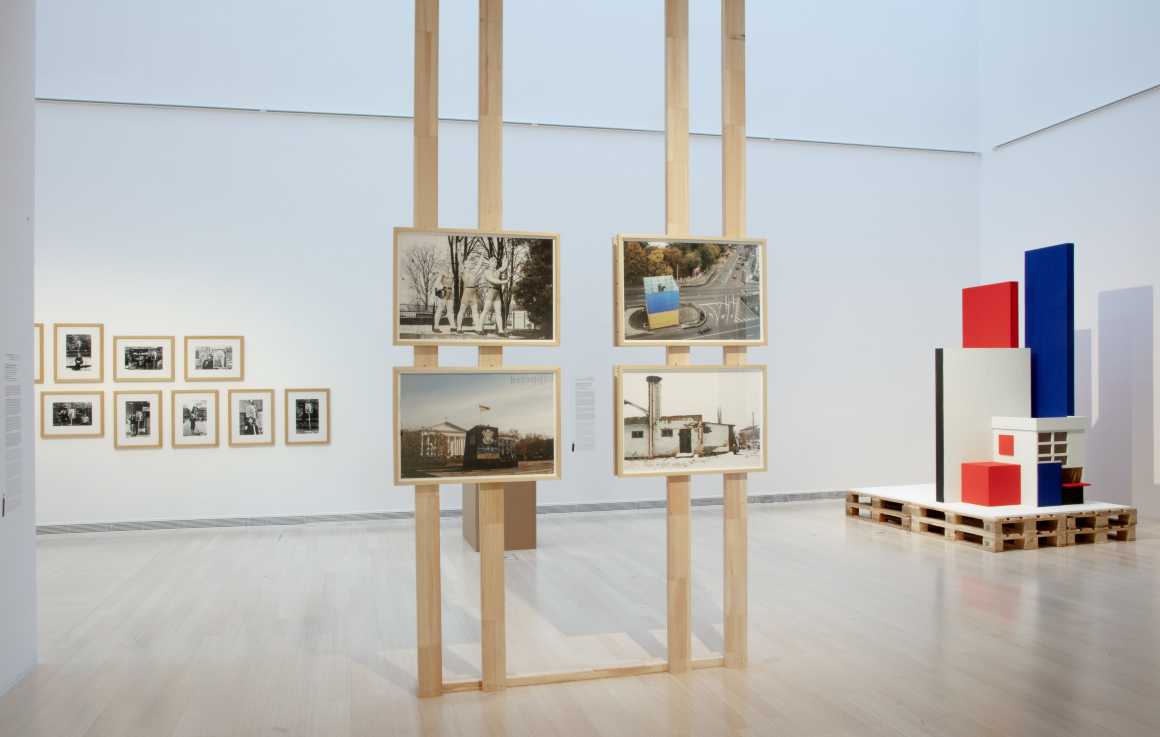
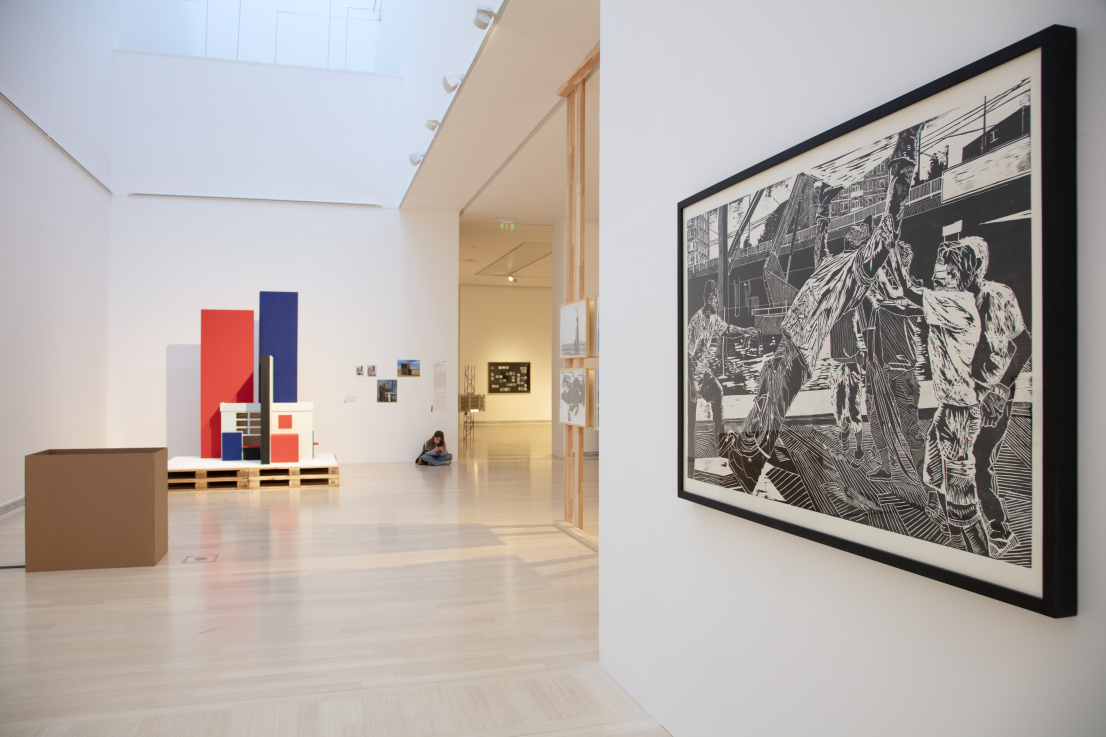
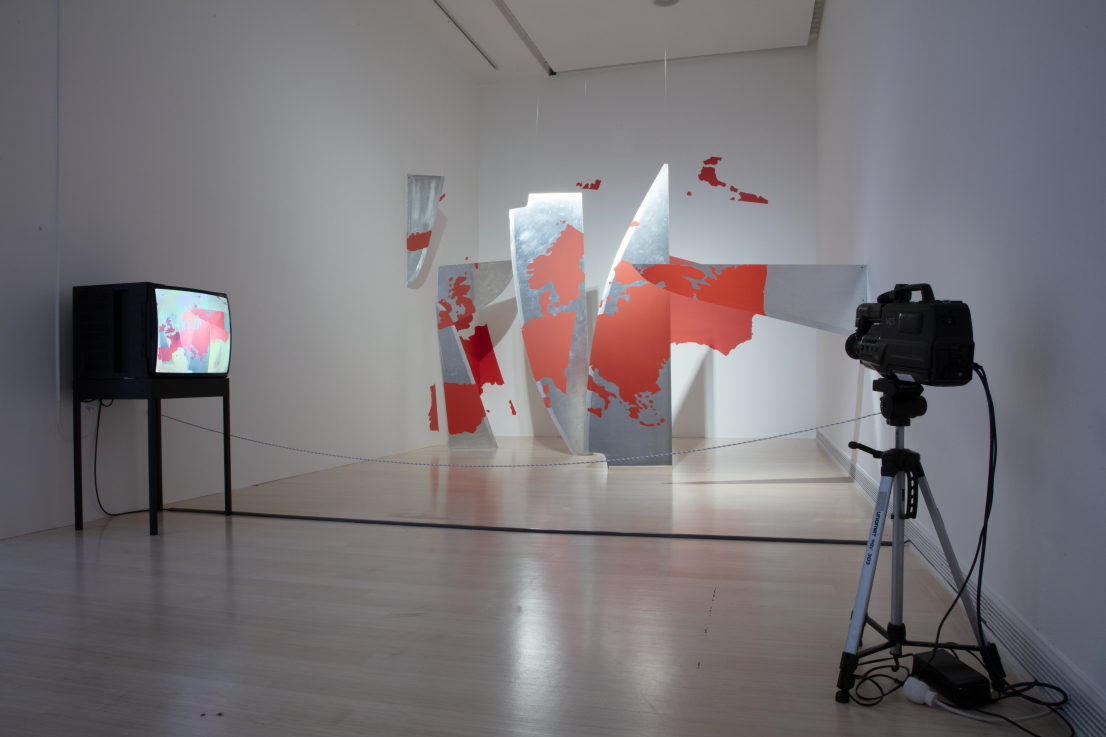
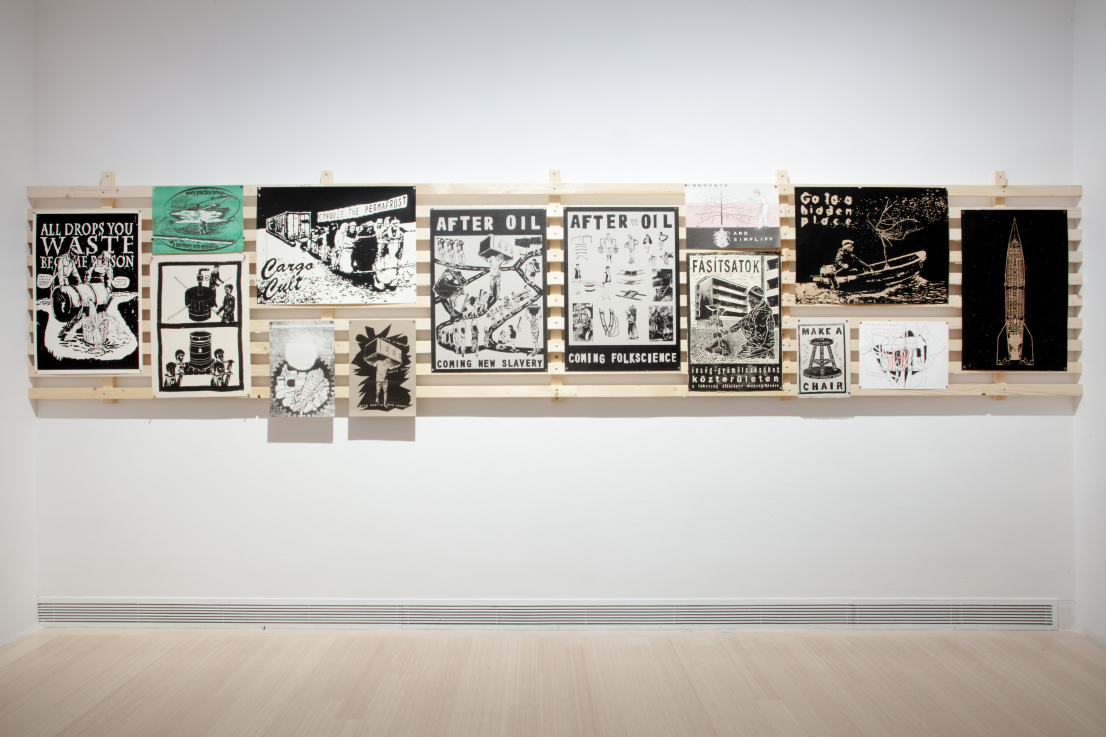
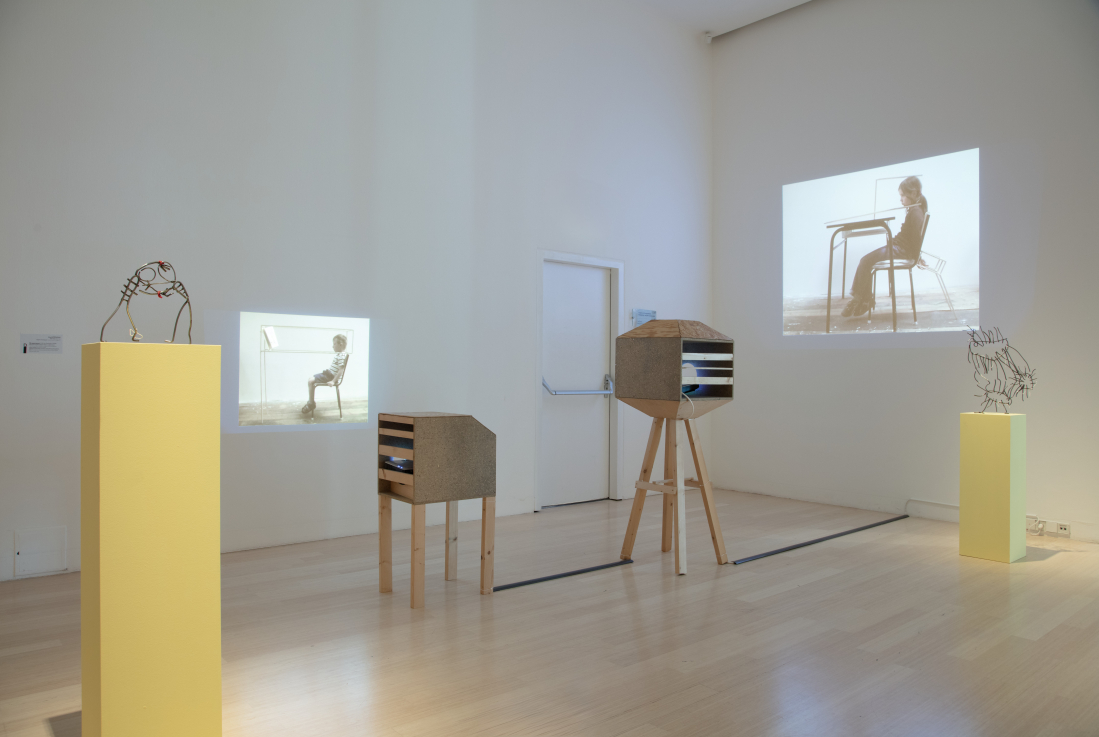
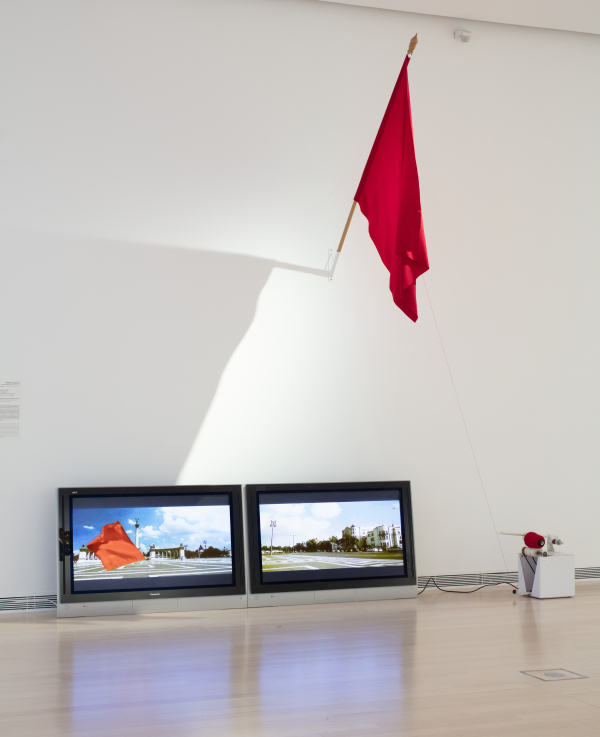
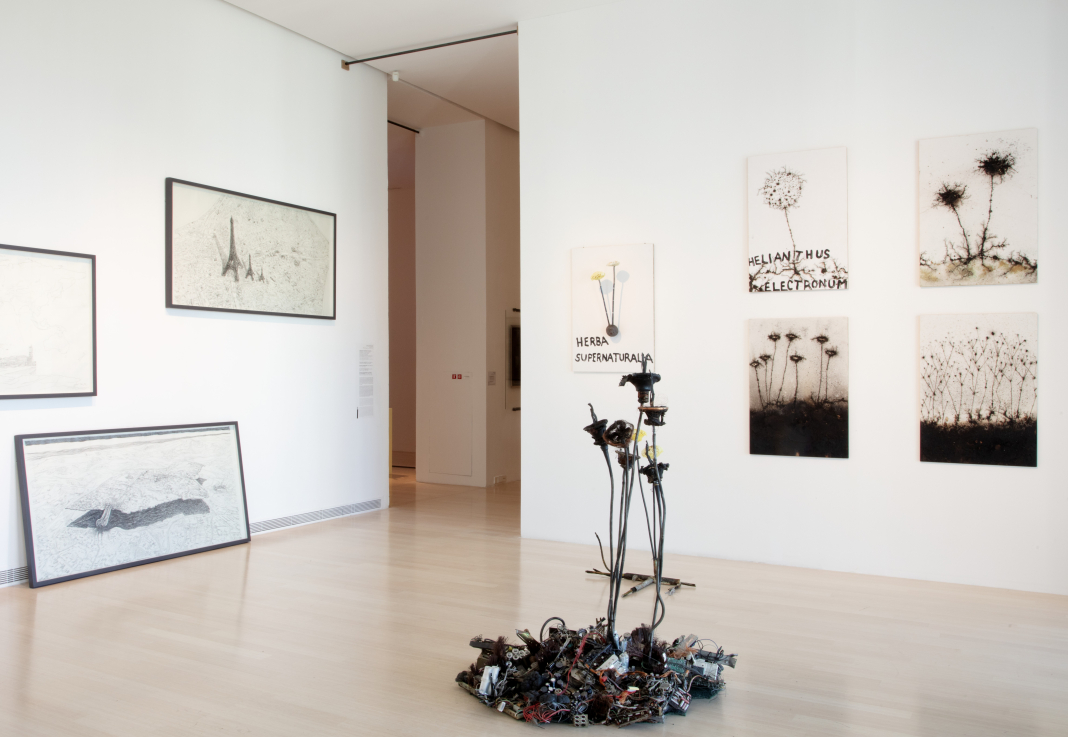
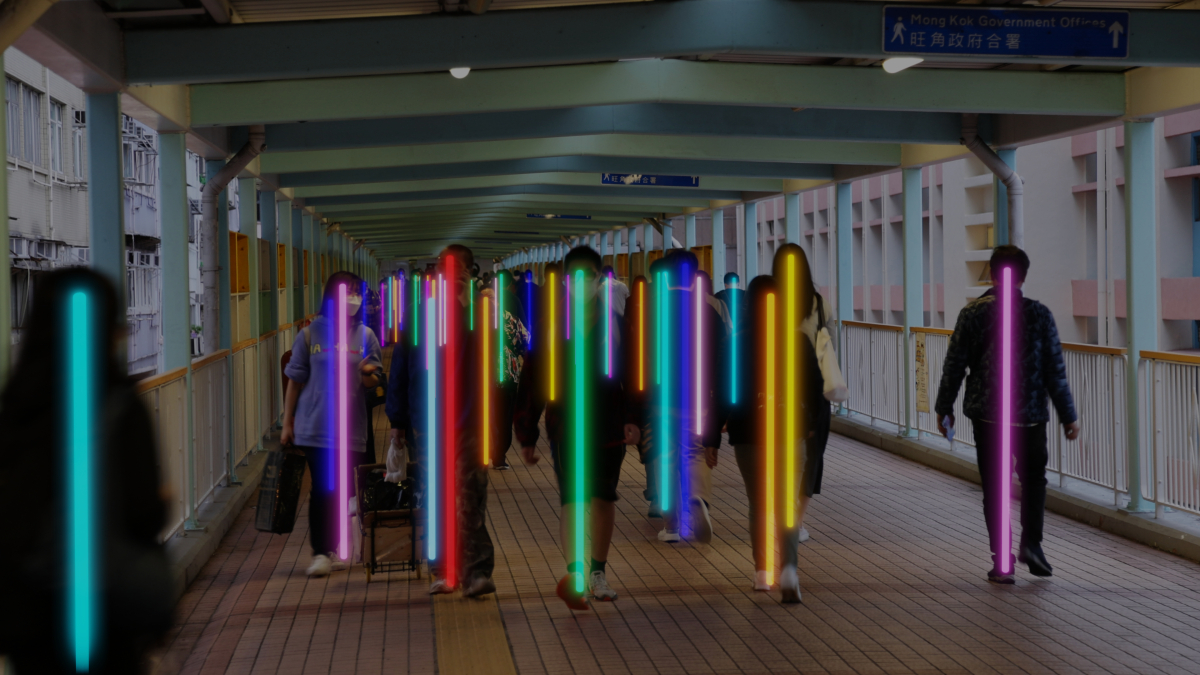
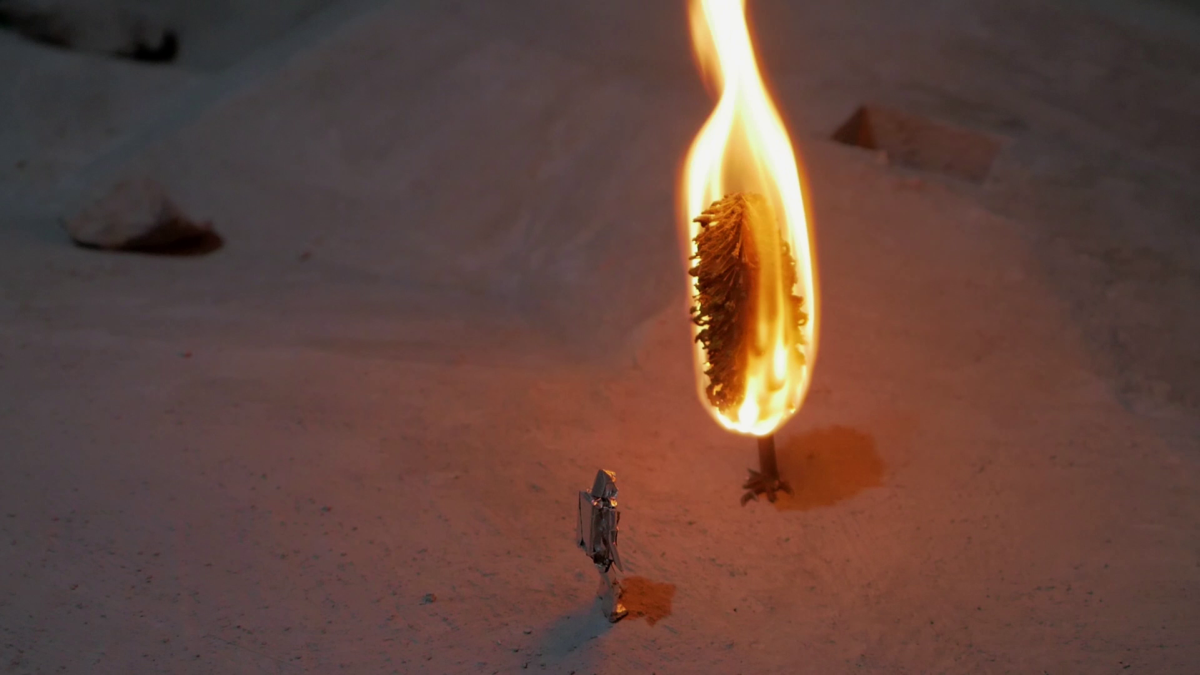
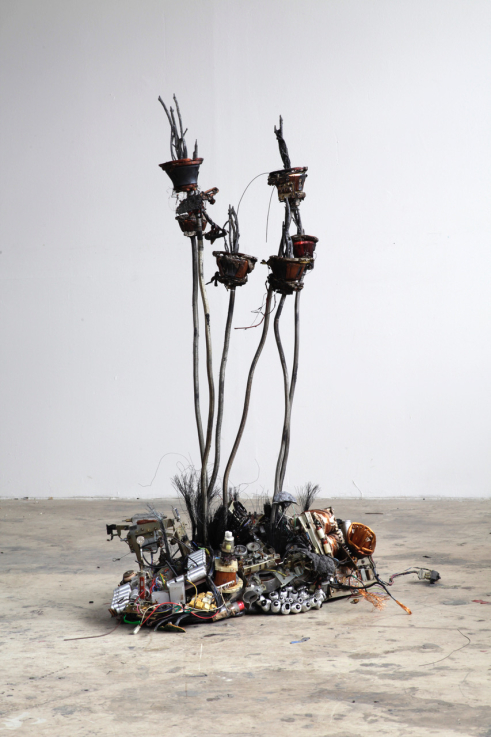
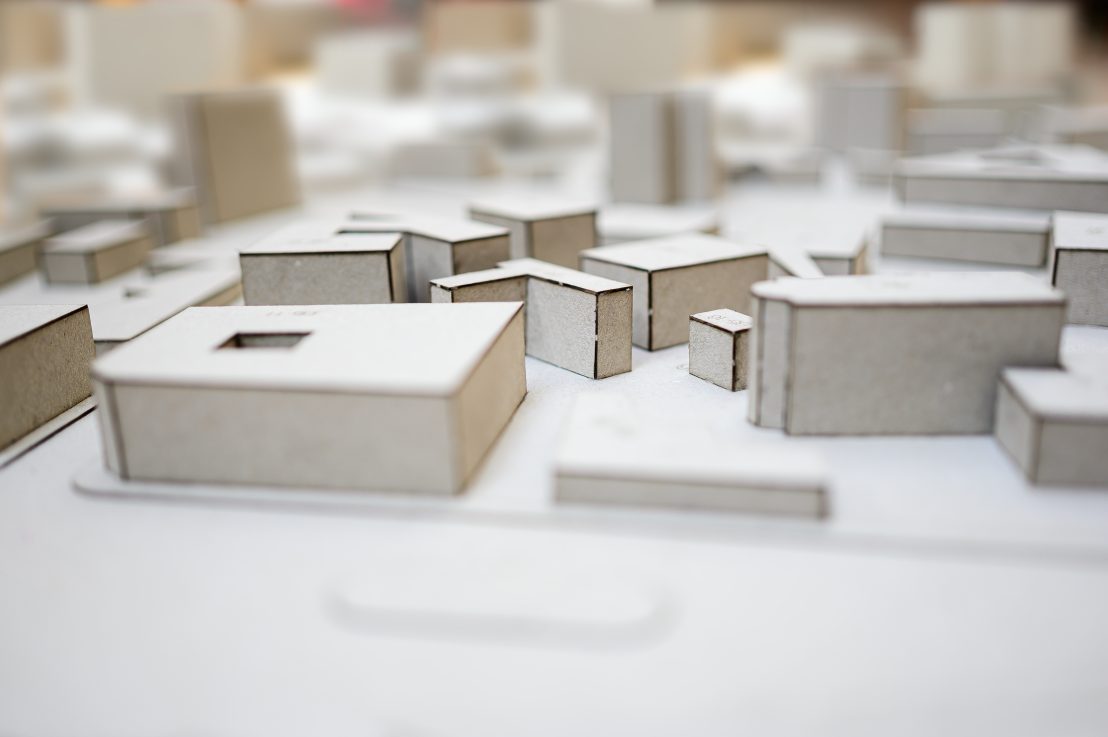
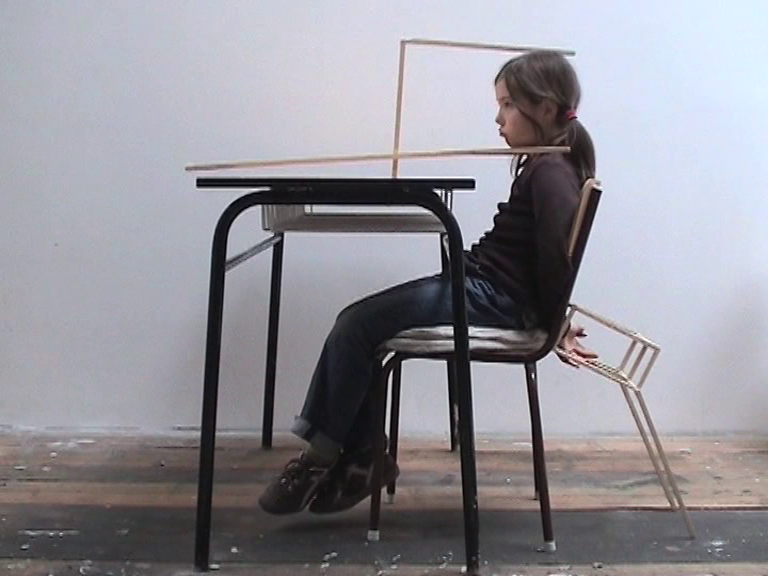
The Ludwig Museum’s collection, which has been developing for several decades, features a number of contemporary works that deal with imaginary visions of the future or interpret the present as a dystopian reflection of the past in some way. The 90 works featured in the exhibition serve as a kind of black mirror: we see not only our present in them, but also a vision of the future that helps us understand what kind of future we want to avoid.
The title of the exhibition, Black Mirror, has multiple meanings and is strongly connected to both the present and the past. In contemporary culture, the term primarily refers to the dark surface of switched-off digital displays. In this sense, the concept has become a sign of malfunctions, freezes, or complete system crashes (“black death”). Charlie Brooker’s dystopian series “Black Mirror” has contributed significantly to its spread in culture, using the dark screen as a metaphor for technological self-reflection. However, the origin of the expression dates back much further and is rooted in occult traditions. The black mirror—typically a surface without a silver backing, with a black back or made of obsidian—functioned as a divination tool in magical practices. It was not only a practical instrument, but also a metaphysical medium: a symbol of the transmission of transcendent knowledge. It was a gateway to an alternative, non-physical reality in which images of the past, present, and future could be revealed. In this context, the black mirror has become a metaphor for hidden knowledge, insight, and a gateway to alternative realities, whose meaning has been enriched with new, reflexive interpretations in modern technological culture.
As the first stage of a longer-term research project, the exhibition examines the works in the collection through the concept of dystopia and includes other works by artists featured in the collection in this exploration. The selected works represent the discourse that has been taking place recently, primarily in the Hungarian art scene, which the exhibition analyzes along various thematic paths.
The section entitled “The Sadness of Fulfilled Tales” is like a time loop in which the present, past, and future converge—as if the present were a black mirror reflecting an entirely non-fictional image of the future for the past. The selected works document how a world conceived as utopian turns into a dystopia in reality, just as the past, turning towards the future, surrenders to the present.
“Personal Worlds” brings together contemporary artworks that explore utopias and dystopias in which creators build worlds from their personal experiences, intuitions, and doubts. These visions of the future raise questions about social coexistence, the role of technology, the environmental crisis, and the transformation of identity, while not ruling out the possibility of individual responsibility and action.
In the section entitled “The End of Ideologies,” the works examine the scope, history, and possible future of various ideologies by evoking symbols of the past and empty signs.
Works in “No(n) Future!” section examine the concepts of place and non-place—a transitory, functional, and impersonal space that have no identity-based, historical, or relational significance—in the context of dystopia.
“Metropolis” focuses on the disposal of urban spaces, the memory and stratification of spaces, and the personal narratives associated with them.
Dystopia is a fictional representation of the world that presents negative developments in the present or future, usually through totalitarian, technocratic, or dehumanising structures. The central element of the dystopian worldview is social oppression, which involves control mechanisms at the collective level and limited freedom, loss of identity, and moral dilemmas at the individual level.
The concept of dystopia, which can be interpreted as a separate category in the history of ideas, is usually defined in relation to utopia (anti-utopia), but it is also subject to strong conceptual relativism. In contrast to utopia, which is the guiding idea of an ideal society, dystopia describes a radically opposite world, where the fictional world is always worse than the existing one. Dystopia as anti-utopia serves primarily as a (dark) mirror: the conditions and characteristics of the world it depicts amplify the negative aspects of the observer’s world. By magnifying our inner fears, it helps us understand what kind of future we want to avoid. Dystopia thus offers a radical critique of current social trends, and is also a source of anxiety.
Download the EXHIBITION BOOKLET HERE.
The exhibition is presented by Müpa Budapest and Ludwig Museum – Museum of Contemporary Art in the framework of the Bartók Spring International Art Weeks.