Walking is one of the most fundamental forms of human movement, extending far beyond its obvious practical, everyday function. It can be understood as a cultural-historical phenomenon, a means of perception and thought, an artistic act, and a philosophical methodology. In the visual arts, it can refer to practices that foreground walking as a central process, event, experience, or outcome. Its cultural history can be traced back to antiquity, while throughout the history of twentieth-century art it gradually became emancipated as an autonomous artistic discourse and exhibition theme. Beginning with the Dada excursion of 1921—the first action in which the act of walking itself constituted the artistic content—it developed through the Surrealists’ aimless wanderings and the Lettrists’ urban drifting (dérive), intersected with Fluxus and its elevation of everyday experience into art, and later became associated with the dematerialising tendencies that expanded the conceptual field of sculpture.
From land art and performance art to relational aesthetics, walking-based practices and exhibitions centred on walking have become increasingly widespread in contemporary art over recent decades, largely due to the growing emphasis on performativity and the rise of socially and ecologically engaged art. Walking in art has acquired political and social dimensions, while also becoming closely connected to urbanism and activism.
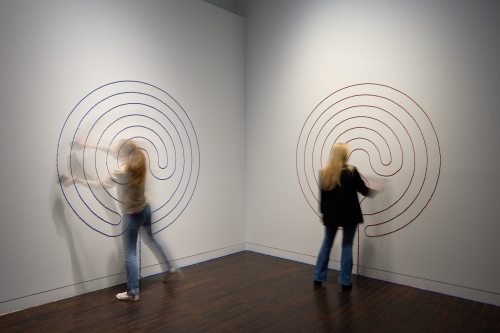
The international group exhibition Walk This Way examines walking as an artistic form, a narrative device, and a critical practice. Through works, projects, and actions, it explores how the everyday act of walking can become a means of discovery, mapping, resistance, and political action. Among other questions, the exhibition considers how walking can shape physical and mental spaces, and asks how this simple activity can create opportunities for slowing down, rediscovering communal and natural environments, and engaging with social, ecological, and urban challenges.
Curators: József Készman, Zsófia Máté
Artists: Francis ALŸS, BARTHA Máté, HAN Bing, CSORBA Eszter, Valie EXPORT, Hamish FULTON, FUSZ Mátyás, GALÁNTAI György, HAJAS Tibor, Mona HATOUM, HIWA K, Michael HÖPFNER, Joachim KOESTER, KORONCZI Endre, Christina KUBISCH, Marinka LIMAT, LOVAS Ilona, Miroslav MANDIĆ, MAURER Dóra, Omar MISMAR, Bruce NAUMAN, Paulo NAZARETH, Yoko ONO, Tiziana PERS, PÓLYA Zsombor, Mladen STILINOVIĆ, SUGÁR János, SZOLNOKI József, TSAI Ming-liang, Lois WEINBERGER, WOLSKY András
The exhibition is presented as part of the Liszt Fest International Cultural Festival, in collaboration between Müpa Budapest and the Ludwig Museum – Museum of Contemporary Art.

Related contents
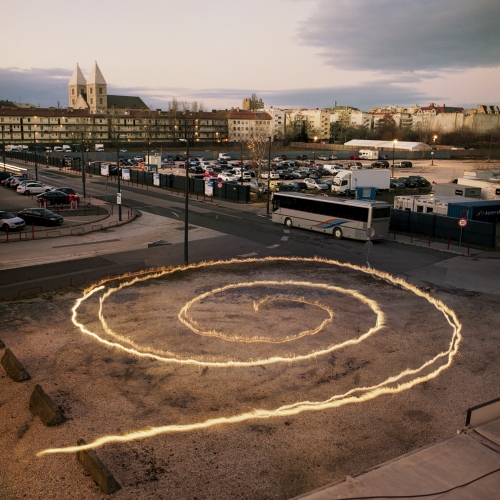
Guided tour in the Walk This Way exhibiton 1. November, 2026, 16:00–17:00
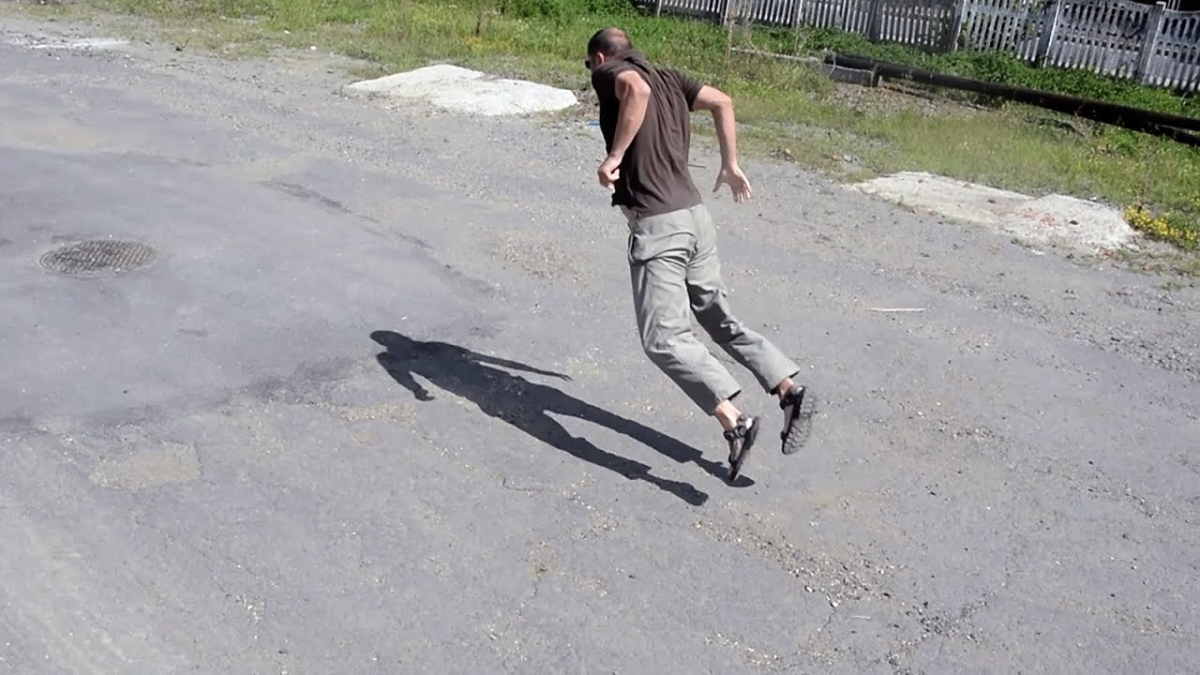
At first glance, walking is a simple, everyday activity: we set off from one place and arrive at another. But what happens when the destination is no longer the point, and walking itself becomes important?
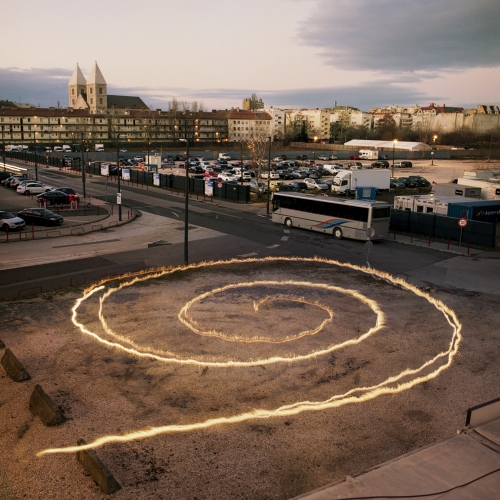
Guided tour in English in the Walk This Way exhibiton 1. November, 2026, 17:00–18:00
At first glance, walking is a simple, everyday activity: we set off from one place and arrive at another. But what happens when the destination is no longer the point, and walking itself becomes important?
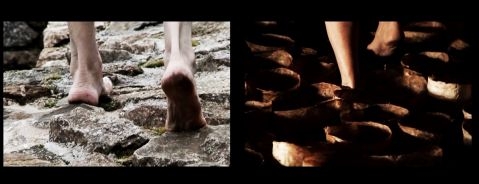
Slow Looking – Slow Down to See! 3. November, 2026, 17:00–18:30
Walking is more than simply getting from one place to another. When we set out on foot, we experience the world around us at a different pace: we notice details, make connections, and give ourselves time to observe and reflect.

Finding Your Own Rhythm – Movement and Art Therapy Workshop 12. November, 2026, 17:00–19:00
We spend our days rushing from one thing to the next, constantly on the move and hardly ever stopping. But do we really need to live our everyday lives at such a pace?
Guided tour in English in the Walk This Way exhibiton 15. November, 2026, 17:00–18:00
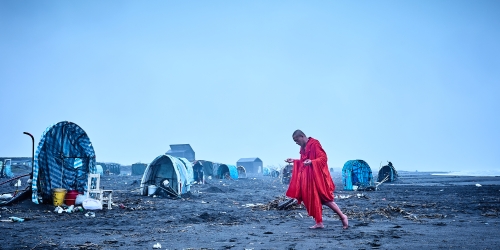
At first glance, walking is a simple, everyday activity: we set off from one place and arrive at another. But what happens when the destination is no longer the point, and walking itself becomes important?
Guided tour in the Walk This Way exhibiton 29. November, 2026, 16:00–17:00
At first glance, walking is a simple, everyday activity: we set off from one place and arrive at another. But what happens when the destination is no longer the point, and walking itself becomes important?
Guided tour in English in the Walk This Way exhibiton 29. November, 2026, 17:00–18:00
At first glance, walking is a simple, everyday activity: we set off from one place and arrive at another. But what happens when the destination is no longer the point, and walking itself becomes important?
Guided tour in the Walk This Way exhibiton 13. December, 2026, 16:00–17:00
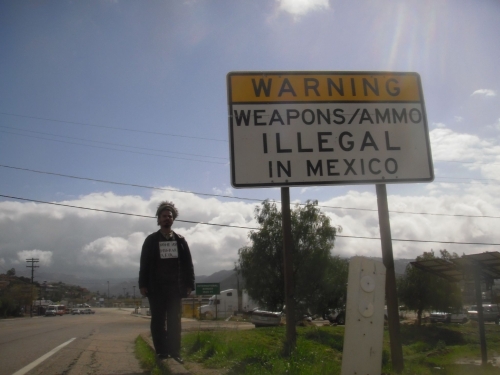
At first glance, walking is a simple, everyday activity: we set off from one place and arrive at another. But what happens when the destination is no longer the point, and walking itself becomes important?
Guided tour in English in the Walk This Way exhibiton 13. December, 2026, 17:00–18:00
At first glance, walking is a simple, everyday activity: we set off from one place and arrive at another. But what happens when the destination is no longer the point, and walking itself becomes important?
Guided tour in the Walk This Way exhibiton 27. December, 2026, 16:00–17:00
At first glance, walking is a simple, everyday activity: we set off from one place and arrive at another. But what happens when the destination is no longer the point, and walking itself becomes important?
Guided tour in English in the Walk This Way exhibiton 27. December, 2026, 17:00–18:00
At first glance, walking is a simple, everyday activity: we set off from one place and arrive at another. But what happens when the destination is no longer the point, and walking itself becomes important?

Guided tour in English in the Walk This Way exhibiton 18. October, 2026, 17:00–18:00
At first glance, walking is a simple, everyday activity: we set off from one place and arrive at another. But what happens when the destination is no longer the point, and walking itself becomes important?

Guided tour in the Walk This Way exhibiton 18. October, 2026, 16:00–17:00
At first glance, walking is a simple, everyday activity: we set off from one place and arrive at another. But what happens when the destination is no longer the point, and walking itself becomes important?
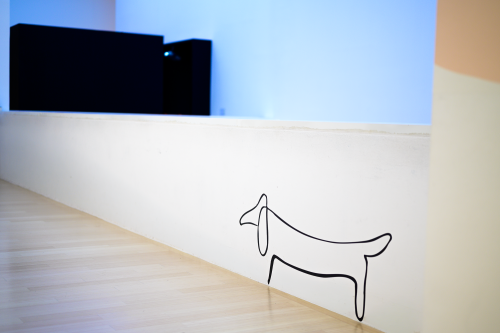
Dog-Friendly Programme for the Walk This Way. Art of Walking Exhibition 17. October, 2026, 10:00–12:00
Walking is good. Walking with a dog is even better – at least, that’s what dog lovers would say.
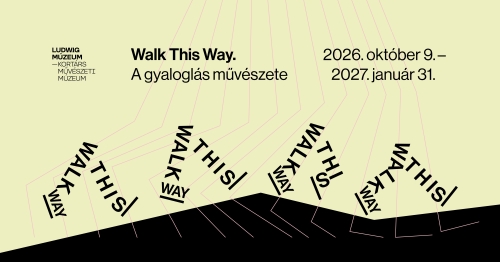
Exhibition opening: Walk This Way. The Art of Walking 8. October, 2026, 18:00–20:00
The Ludwig Museum – Museum of Contemporary Art cordially invites you to the opening of the exhibition
Walk This Way. The Art of Walking
on Thursday, 8 October 2026, at 6 pm.
