The Enigma of Modernity 15. March, 2005 – 15. June
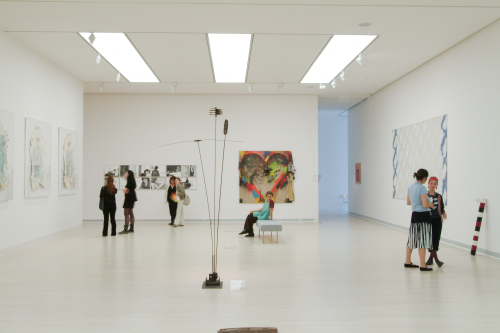
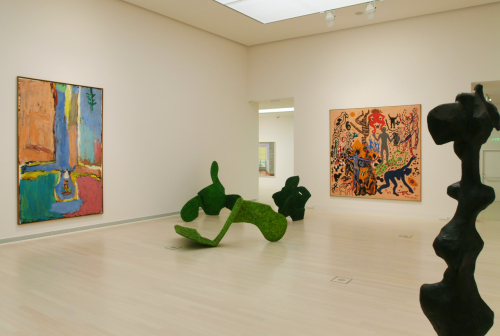
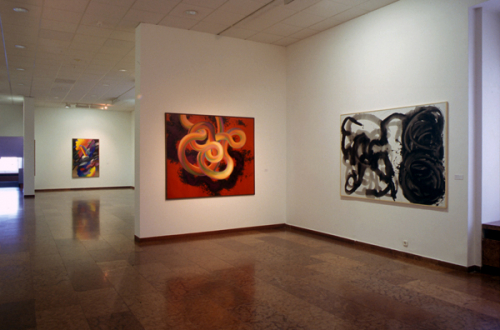
The exhibition showcases the most significant movements and artists of the past fifty years by presenting a selection of one of the world’s most important collections of modern and contemporary art.
The Ludwig Museum is the only museum of contemporary art in Hungary to collect international art. The museum was founded by the Hungarian cultural government in 1989.
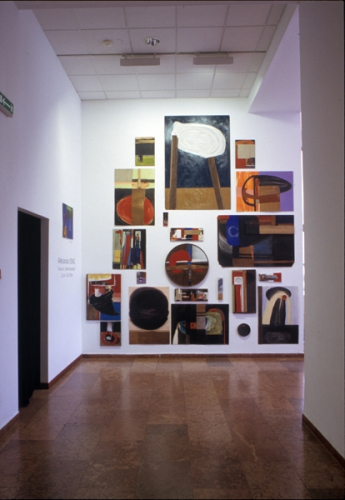
For a long time, the Hungarian born (Budapest, 1936) László Lakner’s name – who lived in Germany in the past thirty years - was associated with the emergence of Pop Art in the Hungarian art scene.
Smart Country
Touching the Invisible
Smart Studio / Interactive Institute, Stockholm
ARTISTS FEATURED:
Thomas Broomé, Arijana Kajfes, Magnus Jonsson, Tobi Schneidler, Ingvar Sjöberg
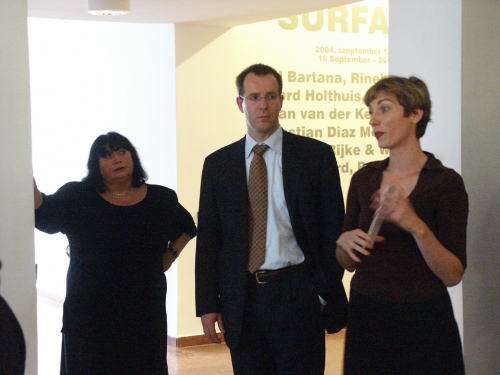
Surfacing has partly developed out of the experiences of one of my previous projects, which defined the gallery’s position as the intersection of the white cube and the black box, where the physical and the absolute, the constructed and the ephemeral, fiction and documentary became interchangeabl
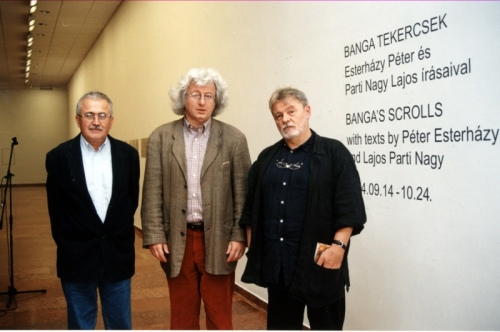
Banga Scrolls
with texts by Péter Esterházy
and Lajos Parti Nagy
14 September – 24 October 2004
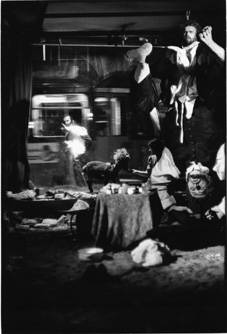
Kassák House Studio – Squat Theatre
Photos of the History of the Hungarian Underground Theatre
The project room’s residency programme, as was launched last year, is continuing in 2004 with its focus on the notion of space, including all its possible interpretations.
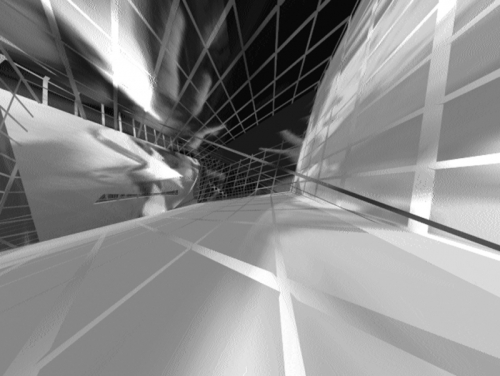
The familiar space of the Ludwig Museum’s Project Room is being transformed through an interactive show. Six projectors placed in the room transpose the space by means of pre-designed images applying 3D effects and light.
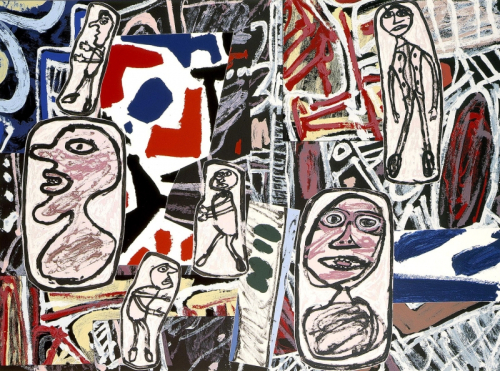
Jean Dubuffet created prints with ardent zeal for 40 years, up until his death in 1985. These prints embody an integral part of his oeuvre. Starting with lithographs, he continued to experiment with various techniques.
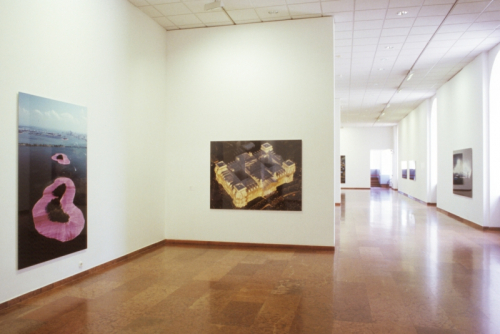
The large-format photographs by Wolfgang Volz reveal to the viewers how humankind treats the landscape, the vulnerable skin of our planet, in a manner that is as much fascinating as it is upsetting.
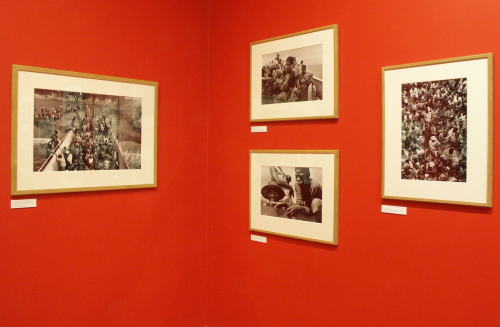
Sebastião Salgado, the world-renowned photographer of Brazilian origin, started his project entitled Exodus in 1993, determined to demonstrate history at the turn of the millennium through the tribulations of displaced populations, refugees and migrants.
The project room’s residency programme, as was launched last year, is continuing in 2004 with its focus on the notion of space, including all its possible interpretations.
The Museum has organised this exhibition to celebrate the artist’s 65th birthday and the publication of a monograph on György Jovánovics by the Corvina Publishing house.
“For ants, the sky begins at the tip of a blade of grass. I wonder whether they can see the clouds at all. For me, the sky begins here, above the Royal Castle of Buda. I can simply reach out and stir the clouds up. Then I brush all the clouds away, and a clear blue sky appears above me.
An artistic career of nearly fifty years provides ample matter for an analytical approach.
Gia Edzgveradze (born in Georgia, currently living and working in Germany) made his first show in the Ludwig Museum Budapest with the title Ultramodern Nihilism in 1999.
In conformity with its eight-year tradition, the STRABAG Painting Competition has remained a high-standard forum for talented young representatives of painting in Hungary.
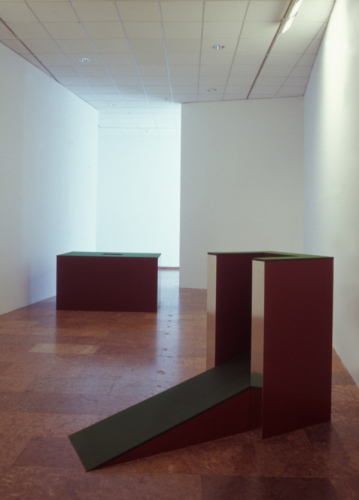
As young as he is, Levente Bálványos has already established his career as an artist. He graduated from the Hungarian Academy of Fine Arts in 1999, where he had studied under sculptor György Jovánovics. Bálványos’ work bears the influence of classical avant-garde and constructivism.
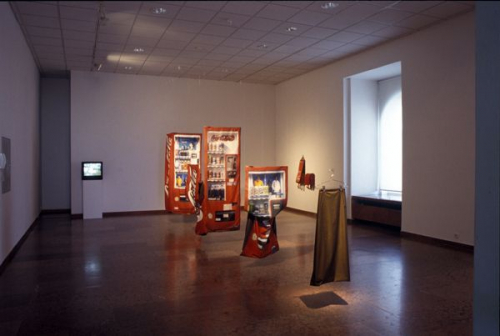
Kokoro no Arika – The Location of the Spirit is the first large-scale exhibition in Hungary for ten years to give an overall survey of the actual situation of Japanese society and art.
Ágnes Szépfalvi’s last major solo show in a Hungarian museum took place in the István Király Múzeum in Székesfehérvár in 1998. Most of the present exhibition’s selection of approximately twenty-five works from the recent years are exhibited for the public for the first time in Budapest.
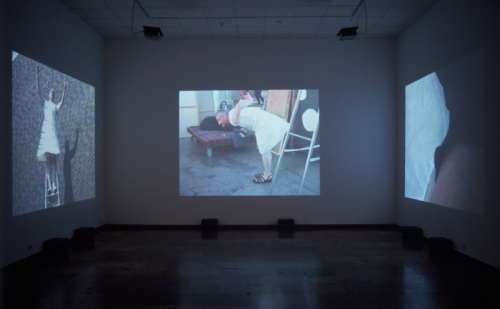
Hajnal Németh graduated from the Intermedia Department at the Hungarian University of Fine Arts in 2000, although prior to this she had already participated in numerous international and national exhibitions with her videos, photographs, installations etc.
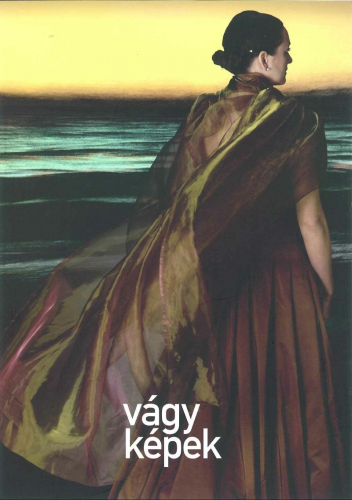
In the course of creating the images for DESIRE we approached people—with or without a personal connection—we were curious to find out more about in the given moment.
We conducted an interview with our selected ‘customers’ which we began thus:
Thanks to Rebecca Major, lost objects – gloves – become found objects. Found objects that grow into hermeneutic packages during the course of an exhibition, for the visitors add their comments to the exhibits. Each glove, recorded in a photograph, induces a surplus of stories.