The Next 30 20–25 October, 2026
In 2026, the Ludwig Museum celebrates the 30th anniversary of its re-establishment. Originally founded in 1989, the institution reopened on 14 December 1996 as the Museum of Contemporary Art.
In 2026, the Ludwig Museum celebrates the 30th anniversary of its re-establishment. Originally founded in 1989, the institution reopened on 14 December 1996 as the Museum of Contemporary Art.

The exhbition consideres neo-avant-garde not as a closed art historical phenomenon, but as a state of mind that continues to inform conceptual, intermedia, feminist, ecological, and activist positions in contemporary art. Building on dialogues across artist generations, the exhibition focuses on issues in common rather than linear chronology: memory, the body, leaving traces, and the possibilities of inner freedom in conditions of external constraint.

The exhibition, which can be considered the first stage of a longer and more comprehensive research project, draws primarily on the Ludwig Museum’s collection, in addition to a few invited artists, and through this, it maps the dystopian artistic assumptions and thought experiments of the Hungarian art scene over the past decades

The exhibition at the Ludwig Museum presents an overview of artistic developments on the island – and, indirectly, of the experiences and dilemmas that shape Taiwan’s past, present, and future.
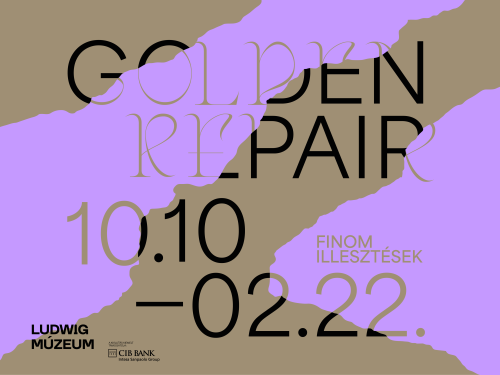
The exhibition Golden Repair is a continuation of a long-term curatorial venture that began in 2023 with the exhibition Handle with Care. It explores the themes of healing and repair in a broad sense, including social, natural, ecological, physical and psychological processes.

Világszép Foundation for Children in State Care celebrates its 15th anniversary this year and organises an unusual contemporary art exhibition at the Ludwig Museum. The exhibition Világszép Connections is not only a showcase of artworks, but also a moving document of the unique encounter between 24 acclaimed contemporary Hungarian artists and 77 young people aged 2 to 25 living in or having left state care.

Established in 2009, the Esterházy Art Award aims to support young, talented Hungarian artists and to promote international dialogue. The competition is open to entries in the field of painting and painting-related techniques, as well as to space installations using these techniques. The prizes, each worth €5,000, are awarded every two years to a minimum of two and a maximum of three Hungarian artists under 45 years of age by an independent, international jury of experts.

The title of the exhibition, 'Handle with Care,' refers to the vulnerability of those in need of care, the asymmetrical relationship between caregiver and cared-for, the fragility of life, and the vulnerability of our ecosystem, the gaps in our social fabric, and the everyday rituals of caregiving - but above all, it emphasizes the necessity of collective responsibility.

The Hungarian Pavilion showcases the work of creative professionals who have graduated as architects and make successful use of their architectural knowledge outside the profession.

The upcoming exhibition at the Ludwig Museum – Museum of Contemporary Art aims to offer an insight into the recent past of the contemporary French art scene through the lens of the winners and nominees of the prestigious Marcel Duchamp Prize, celebrating its 25th anniversary in 2025.

Millennials have played an important role in the large-scale contemporary art collection launched by the Central Bank of Hungary, now in its fifth year of expansion. This exhibition presents a selection of them. Although an institutional collection cannot give a complete picture of an entire generation, it can reveal typical positions. The curatorial selection on display here uses the works of Generation Y young people in the collection to draw a possible profile of the generation: the Y profile.

Parallel to the FAQ museum education methodology exhibition, a selection of the museum’s best-known artworks will be on display in the rear exhibition rooms on the third floor, covering approximately 400 m². Spanning from the 1960s to the 1980s, this collection offers an art historical overview of Peter and Irene Ludwig’s acquisitions. The exhibition features paintings by Pablo Picasso, key figures of American and European Pop Art, prominent representatives of Photo- and Hyperrealism, as well as a selection from the "Neue Wilde" (New Wild) painting and sculpture movement of the 1980s.

What does it mean... what can I do if... where does it arrive... how much does it cost... how can I pay... when can I collect it...? We could go on and on with the list of frequently asked questions about the difficulties of daily life. The exhibition focuses on questions as well as techniques of asking questions related to contemporary art, with particular emphasis on the practice of asking questions as a tool of pedagogy and art education.

The first section of the two-part exhibition focuses primarily on women’s roles and women’s (self-)representation in art, while the second section presents the genres and themes chosen by women, as well as their artistic achievements and accomplishments over the past fifty years, through their works in the museum.

The present exhibition features the project shown in Venice completed with a selection of works realised by the artist in the last decade, that can be considered as prefigurations, in their topics and technical formulations, of the works hosted this year by the Hungarian Pavilion at the Biennale.

The first section of the two-part exhibition focuses on women’s roles and women’s (self-)representation in art, while the second section presents the genres and themes chosen by women, as well as their artistic achievements and accomplishments over the past half century, through their works in the museum.

Nedko Solakov’s humorous, site-specific installation is located in the museum’s lobby, next to the cloakroom. In this work, Solakov explores the idea of an artist who seeks to view the world from a radically different perspective—literally by turning himself upside down to shift his viewpoint.

The exhibition Reversed Objects raises a number of questions ranging from the status of objects as either mere things or artworks to the functioning of art institutions, while touching on various themes and disciplines. The exhibition Reversed Objects explores the reasons for the presence, and the various meanings, of traditional craft techniques, which have become increasingly prevalent in contemporary art over the last 10–15 years.

The exhibition aims to showcase the cultural context and genealogy of one of the defining architectural forms of 20th-century Hungary. As a medium for private, self-built construction and an architectural manifestation of modernization, the cube house was a spontaneous response of vernacular architecture to the societal demands for housing.

Caring is a common experience for all of us, shaping our lives from birth until death. It can be interpreted on the personal level (self-care) or projected onto relationships between people (maternal or parental care, elderly care). Still, it can also be extended to caring for nonhumans and, in a broader sense, for the Earth itself.

Márton Nemes is one of the most innovative representatives of the young generation of painters, who experiments with a 21st century reinterpretation of the image, pushing the boundaries of traditional painting in material and space.

In the framework of Bartók Spring, the museum will present the exhibition of a jazz musician and photographer with a special talent.

The Ludwig Museum’s exhibition titled À la recherche de Vera Molnar pays tribute to the artistic legacy of Vera Molnar, who passed away shortly before her 100th birthday.

The Esterházy Privatstiftung is announcing the Esterházy Art Award again in 2023.
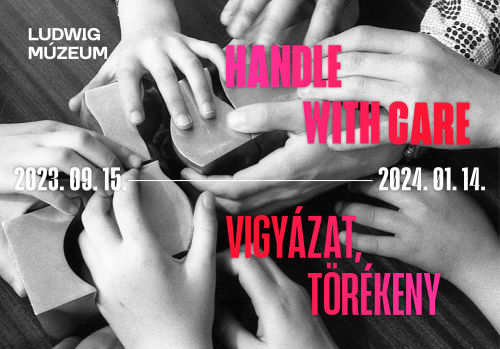
The exhibition’s title Handle with Care refers to the vulnerability of those in need of care, the asymmetrical relationship between carer and cared for, the fragility of life and our ecosystem, and the cracks and gaps in the social care system, but most of all, it calls attention to the need for collective responsibility.